

The Complete Hiking Pole Buying Guide
Choose with confidence.
Hike with purpose.
The right hiking poles should suit your terrain, body, storage needs and hiking style. This practical guide compares the features that matter most, without unnecessary gear jargon.
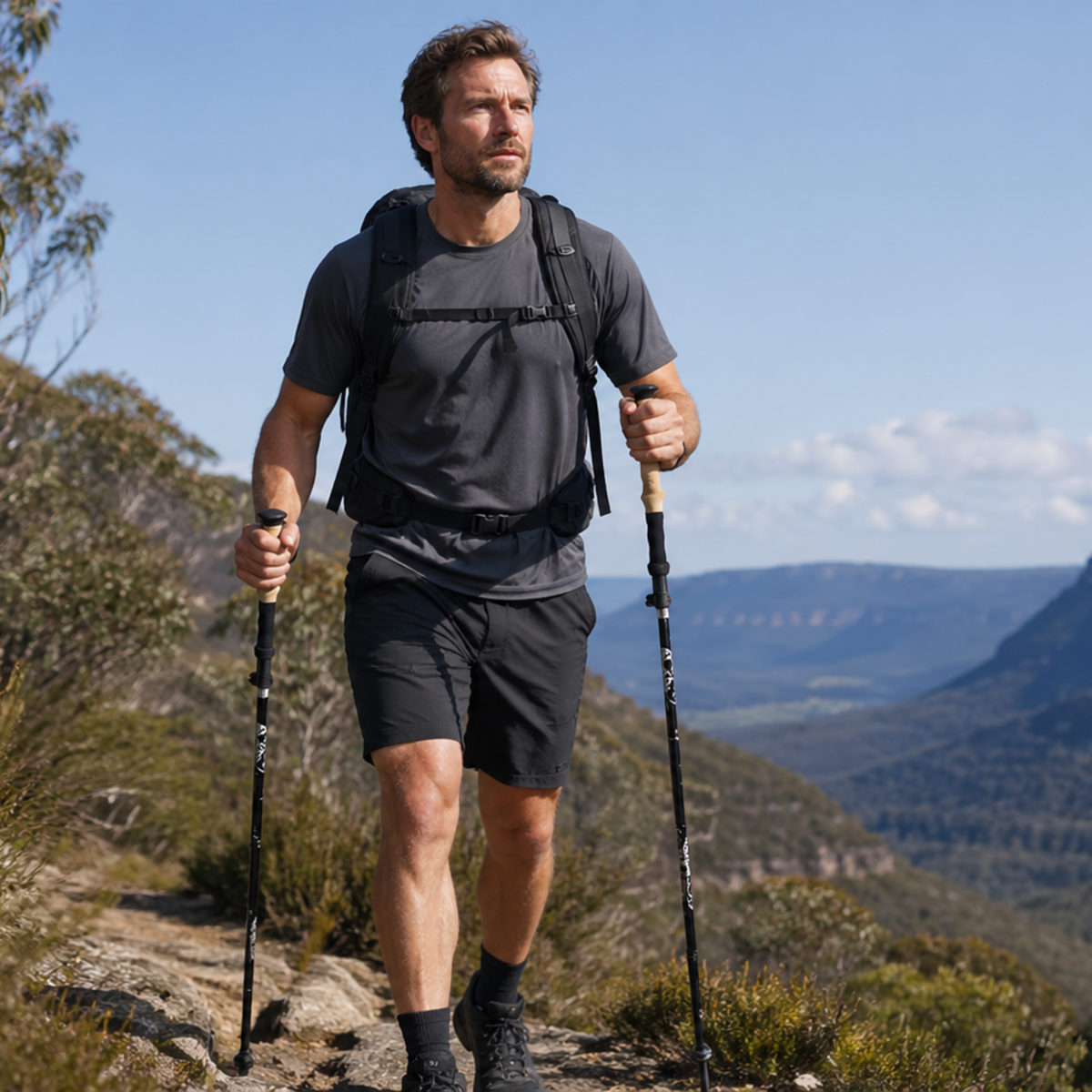
A balanced all-round setup
There is no single pole design that is perfect for every hiker. However, hikers looking for a strong combination of durability, comfort, compact storage and straightforward adjustment should consider high-strength aluminium, a folding design, natural cork grips, an external clip lock and a length range suited to their height.
Why use hiking poles?
Hiking poles add extra contact points between you and the trail. Used correctly, they can support balance, rhythm and more controlled movement across changing terrain.
Uneven Terrain
Extra points of contact can provide additional stability when moving across rocks, loose ground, roots and irregular trails.
Uphill Rhythm
Consistent pole placement can help create a steady hiking rhythm during climbs and provide support when carrying a loaded pack.
Controlled Descents
Thoughtful pole placement can provide more confidence and control when navigating long, steep or technically uneven descents.
Aluminium vs carbon hiking poles
Material affects weight, feel, durability and price. Neither option is automatically better: the right choice depends on what you value most on the trail.
High-Strength Aluminium
Best for: regular hiking, rugged terrain and hikers prioritising durability.
- Strong and practical for varied trail conditions
- Generally more impact-tolerant than carbon fibre
- Usually offers strong performance for the price
- May bend after a major impact rather than suddenly fracture
Carbon Fibre
Best for: hikers placing minimum weight above impact tolerance and price.
- Very lightweight construction
- Can provide effective vibration dampening
- Appeals to long-distance and weight-conscious hikers
- Premium models can feel exceptionally light in motion
Why Hagell chose 7075 aluminium
We selected high-strength 7075 aluminium to create a dependable balance between trail durability, practical weight and long-term everyday use. It is designed for hikers who want confidence across changing Australian terrain without prioritising minimum weight above everything else.
Folding vs telescopic hiking poles
The best design depends on how much adjustment you need and how compact you want your poles to be when they are packed away.
| Feature | Folding Poles | Telescopic Poles |
|---|---|---|
| Packed Size | Usually folds into shorter sections for compact storage and easier transport. | Collapses into overlapping shafts but is often longer when packed. |
| Setup | Sections connect quickly, making assembly convenient at the start of a hike. | Each section is extended and secured individually. |
| Adjustment | Adjustment varies by model. Some include one adjustable upper section. | Often provides a broader overall adjustment range. |
| Best Suited To | Travel, compact storage, day hikes and hikers who value fast setup. | Hikers needing maximum adjustability or sharing poles between users. |
Cork vs foam grips
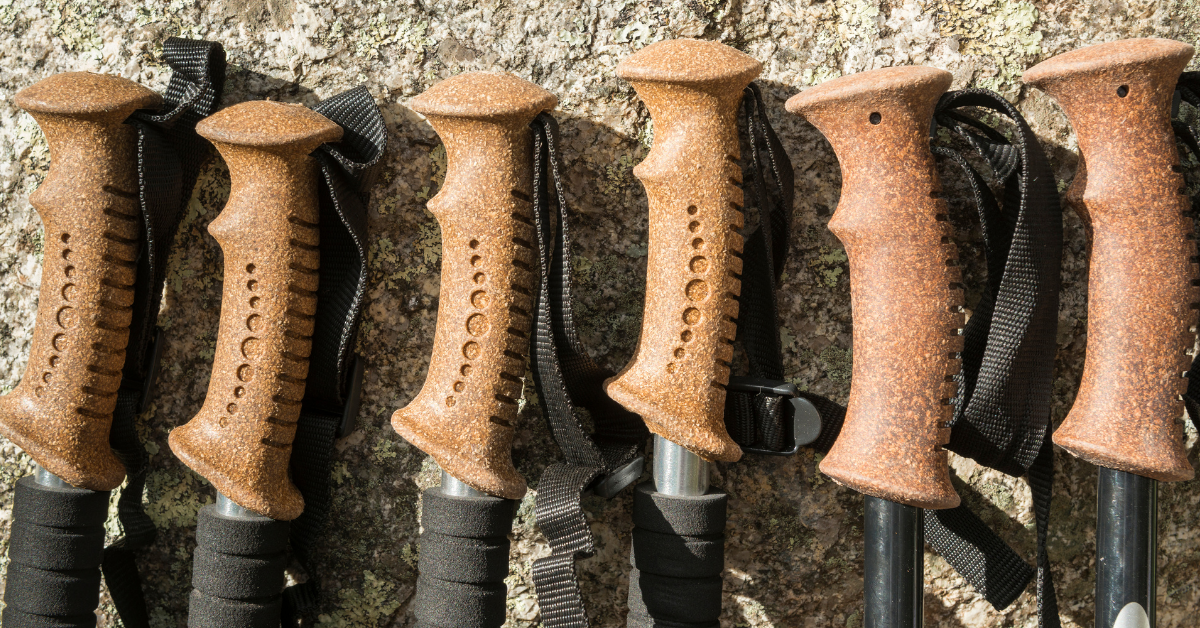
Your hands stay connected to the poles for most of the hike, making grip shape and material important for long-term comfort.
Comfortable in warm conditions, naturally textured and able to gradually conform to the hand. A strong option for regular and longer hikes.
Soft, lightweight and comfortable immediately. Depending on design and use, foam may retain more moisture and wear faster over time.
Durable and easy to clean, although it can feel warmer and less breathable during extended hiking in hot conditions.
Clip locks vs twist locks
A secure locking mechanism helps maintain the selected pole length. Both systems can work well when correctly adjusted and maintained.
Clip Lock
- External mechanism is easy to see and access
- Quick to open, adjust and close
- Tension can usually be inspected directly
- Convenient for adjustments during a hike
Twist Lock
- Clean appearance with an internal mechanism
- Operates by rotating the pole sections
- Can work reliably when correctly tightened
- May require more technique during adjustment
How tall should your hiking poles be?
Correct pole length supports a more natural position. Your height is a useful starting point, but comfort, footwear and terrain should also guide the final adjustment.
| Your Height | Suggested Pole Length |
|---|---|
| 150–160 cm | 100–110 cm |
| 160–170 cm | 110–115 cm |
| 170–180 cm | 115–120 cm |
| 180–200 cm | 120–125 cm |
This table is a general starting guide. Many hikers shorten their poles slightly for sustained climbs and lengthen them slightly for sustained descents. Adjust gradually and choose the position that feels natural and controlled.
Which hiking poles suit your hiking style?
Start with the type of hiking you do most often. Your priorities will usually point towards the features that matter most.
The Weekend Hiker
You walk local trails, explore new routes and want one dependable setup for varied conditions.
- High-strength aluminium
- Natural cork grip
- Adjustable length
The Frequent Traveller
You regularly transport your equipment and want poles that pack efficiently alongside the rest of your trail gear.
- Short folded length
- Fast folding assembly
- Protective storage bag
The Rugged-Terrain Hiker
Your trails regularly include rocks, loose surfaces, elevation and technically uneven ground.
- Durable aluminium construction
- Accessible external locking system
- Interchangeable terrain tips
The Weight-Focused Trekker
You carefully calculate pack weight and are prepared to pay more for lighter materials.
- Carbon fibre construction
- Minimal accessory setup
- Lightweight grip materials
What to check before buying hiking poles
Specifications matter most when they connect to how you will actually use, carry and maintain your poles.
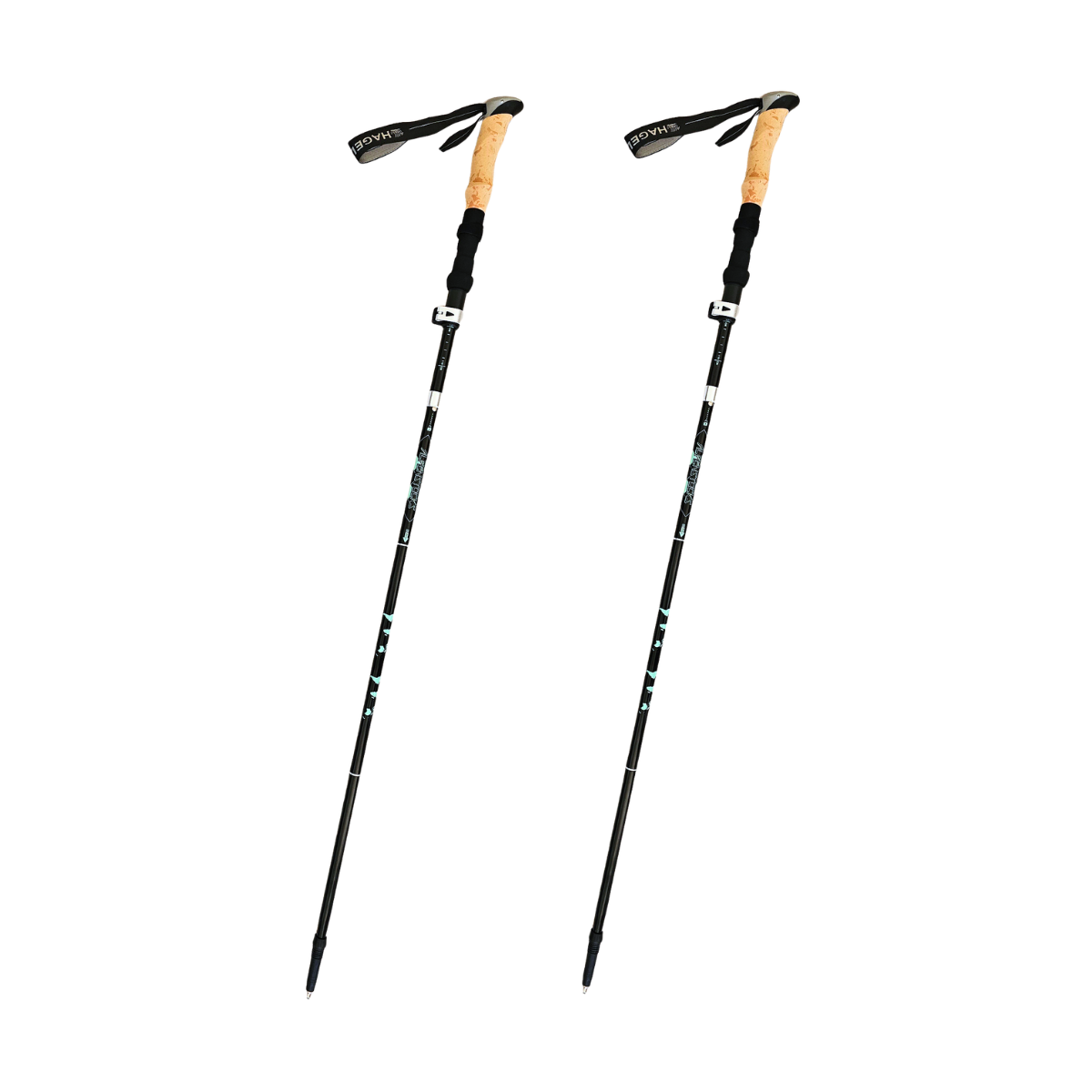
Built around the features that matter
Hagell Alpenstocks Hiking Poles combine durable construction, compact storage, comfortable handling and practical adjustment for hikers who want one dependable pair across changing terrain.
Hiking pole FAQs
Practical answers to common questions about materials, sizing, designs and everyday use.
Are aluminium or carbon hiking poles better?
Aluminium is generally a strong all-round choice for durability, value and regular use on varied terrain. Carbon fibre is usually lighter and can provide effective vibration dampening, making it attractive to hikers who prioritise minimum weight. The better option depends on your terrain, budget and priorities.
Are folding hiking poles adjustable?
Some are. Many folding poles use fixed lower sections with one adjustable upper section, while other models have limited or no adjustment. Always check the usable length range before buying.
What height should my hiking poles be?
On level ground, a useful starting point is to adjust the pole so your elbow forms an angle close to 90 degrees while the tip rests beside your foot. Use a sizing chart as a guide, then make small adjustments for comfort and terrain.
Are cork grips suitable for Australian conditions?
Cork is a popular option for warm conditions because it provides a naturally textured feel and remains comfortable during longer hikes. Grip shape, strap adjustment and personal preference are also important.
Should I use one hiking pole or two?
A pair provides balanced support on both sides and is commonly preferred for hiking, trekking and sustained elevation. A single pole can still provide useful support for casual walks or users who prefer to keep one hand free.
Can hiking poles be taken on a plane?
Airline and airport security requirements vary by route and destination. Check directly with your airline before travelling. Hiking poles may need to be packed in checked baggage rather than carried into the cabin.
Which hiking pole tips should I use?
Match the tip to the surface. Carbide tips are commonly used on natural trails and firm ground, rubber tips can provide quieter contact on harder surfaces, and wider baskets help reduce sinking into softer terrain such as mud, sand or snow.